|
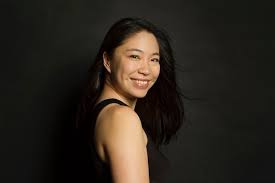
| Fernando Miguel Jalôto © Michal-Novak |
On July
22nd 2025, I spoke to Fernando Miguel Jalôto at his home in Vila Nova de Gaia,
Portugal.
Miguel
Jalôto holds Bachelor- and Master of Music degrees from the Department of
Ancient Music and Historical Interpretation Practices of the Royal Conservatory
in The Hague (Netherlands), a Master’s Degree in Music from the University of
Aveiro and a PhD in Music Sciences/Historical Musicology from Universidade Nova
de Lisboa (Portugal). He collaborates with specialized Portuguese and
international groups and is the founder/artistic director of the Ludovice
Ensemble, one of Portugal's most active and prestigious early music groups. He
has recorded widely, has appeared on Portuguese-, German-, Estonian- and Czech
radio and on the Mezzo, Arte and RTP television channels.
PH: Miguel,
you play harpsichord, clavichord, fortepiano and Baroque organ and you are a
musicologist. Where do you see yourself primarily?
FMJ: First,
I see myself more as a performer than a researcher, because the musicology and
research came out of my need to understand and know more about my job as a
performer. And, as a performer, I consider myself, above all, a harpsichordist.
The harpsichord was my first instrument, the instrument closest to my heart and
the one I play most regularly. But once you are in the world of historic
performance practice you understand that it is very hard to draw a line in
terms of repertoire, because we share so much repertoire with other keyboard
instruments. Also, as a continuo player, you feel the need to study and play
the organ and not just be a harpsichordist. One thing has always led me to the
other. Of course, as a keyboardist in a Catholic country, you always play a bit
of organ - it is part of your DNA. The fortepiano is like a continuation of the
harpsichord. I feel that many fortepianists come from the modern piano, but,
going from the harpsichord to the fortepiano, I feel I followed the more logical
historical process. As to the clavichord, it is such an important instrument,
bringing all together, forming a bridge between the organ, harpsichord and the
fortepiano. I feel that, with my interest in historic keyboard instruments,
they complement each other and give me more tools as a performer. I really love
to play the organ and I love to play the clavichord. I also play medieval
keyboards. I have an organetto and recently bought a clavicymbalum – it looks
like a baby 15th century harpsichord. Its design is based on a manuscript from
the late 15th century, drawn by a theoretician who produced the earliest
depiction we have of a harpsichord. The maker built the copy based on this
drawing. It is interesting to see that our repertoire goes back not just to the
16th century.
PH: Do you
come from a musical family?
FMJ: Not
really. I come from a humble family. My father was a taxi driver and my mother
a stay-at-home mum. We four siblings all studied music, as our parents felt
that music was really important to our education. They didn't send us to study
music in order to become musicians, but my older sister did become a solfege
teacher. My other sister studied singing. Both sisters played the accordion, a
very popular instrument here in Portugal. My brother played the guitar. My
maternal grandfather played the guitar and was a good singer. Music is in our
family, but not as a family profession.
PH: What
was your earliest musical experience?
FMJ: My
mother always loved to sing to us; those are my earliest musical memories. She
would sing folk songs, a lot of fado (typical Portuguese music) and she would
make up words to adapt the songs to us children. And then, of course, there was
church music. Because my sisters were already playing the piano, I started
studying piano when I was five years old. I hated it because of the piano
teacher, who was not very encouraging. I stopped at age ten. But I loved to
sing and sang in choirs until my voice broke. By then, I felt very connected to
music and my sister, who was studying singing, suggested I take singing
lessons. At that time in Portugal, you could not enrol in singing lessons at a
state school before age 18. I was just 16. At the Porto Conservatory, they
suggested I start with all the other music subjects. Music education in
Portugal offers a very rich curriculum: in addition to learning an instrument,
you get solfege, music history, acoustics, choir, chamber music and
composition. So, I started with these subjects. One of the subjects was
keyboard practice for three years and I was expected to learn piano. With not
such good memories of my former piano lessons, I said "no!" At
the school they said you could also take harpsichord. I knew what a harpsichord
was, and requested to enrol to do three years of harpsichord study. It was easy
to get accepted as the harpsichord teacher didn't have many students. Her name
was Maria de Lourdes Alves. From the very first moment, she was extremely
kind and an excellent teacher. I immediately fell in love with the instrument
and its repertoire. I recall that, after my first lesson, I already knew that
the harpsichord would be a very important part in my life. That's how I started
playing harpsichord and my journey to becoming a professional musician. With
the Porto Conservatory considered high school level, I finished there at 21.
PH: That
seems late.
FMJ: Well,
I started at a later age. But, at the same time, I was starting a degree in
architecture at the university. Not absolutely sure of what I wanted to do, I
requested a year off from the architecture course to study music in the
Netherlands. I never returned to the Architecture Faculty. I stayed in the
Netherlands for seven years to do bachelor- and master's degrees, taking one
year longer, because, during my masters, I became ill with a neurological
disease and needed time to recover.
PH: Where
did you go from there?
FMJ: I
returned to Portugal. That's when I decided I was very happy with early music.
As a performer, I had received a very good education in the Netherlands. But,
because of my background in architecture, I felt I also needed something more
academic. So, I enrolled at Aveiro University (Portugal) to do a (second)
master's degree, this time in Music Research and then a PhD in Historical
Musicology.
PH: Would
you like to mention some musicians who have influenced you?
FMJ: That's
a nice topic, but I must say I am not a person to have big idols or huge
admiration for any one person. I can admire someone's work in a particular
field or in performance, how someone deals with a certain repertoire or style,
but I don't remember finding any artist so amazing that I wanted to imitate the
person. As a harpsichordist, my biggest reference for performance and musical
understanding is Gustav Leonhardt. He would come to Portugal quite often and I
had the opportunity of taking three masterclass lessons with him. He was
already very old and no longer officially teaching. Of course, my main teacher,
Jacques Ogg, was very important to me in many aspects. He was a student of
Leonhardt, so I feel I am a "grandchild" of Leonhardt. Of course,
when you study in the Netherlands you have the chance to meet amazing people. I
had lessons with the Kuijken brothers – Sigiswald, Wieland and Bart. My closest
friend, and co-founder of the Ludovice Ensemble, Joana Amorim, is a flautist
and she was a student of Barthold Kuijken. You had the opportunity of contact
with all this "golden" generation of Dutch and Belgian early music
people. In general, they all make up part of my references. I'm very passionate
about French music - I grew up listening to Christophe Rousset, Olivier
Beaumont, William Christie and Les Arts Florissants and they were important to
my education. But, as I said earlier, these are people I admire in certain
areas, but I don't think that everything they do is perfect. A musician I would
like to mention is the Italian violinist Enrico Onofri. I met him in Portugal
on my return from the Netherlands. He is a fascinating person. I had come from
all the rules and strictness of my studies and the importance of reading the
treatises and sources. Enrico is very well informed, but he has this very
Italian, passionate and free approach to music. I think what I learned from him
was to always have the human voice and cantabile sound as my main objective in
harpsichord-playing. I do think that what makes me a little different from many
(or most) harpsichordists is that I really go for a very vocal, singing
approach in my playing. The harpsichord is an instrument that doesn't naturally
sing much, but that is my aim and something I learned with Enrico – to imitate
the human voice or, sometimes, the violin, the oboe or flute. Amazingly, Gustav
Leonhardt had said that when you are playing the harpsichord, you should always
imagine you are playing a different instrument or even leading an orchestra,
because if you play the harpsichord just thinking about the harpsichord sound,
it will end up sounding very dry, mechanical, unmusical and with very serious
limitations. Well, I love the instrument's limitations as one loves a person,
still accepting their character faults. Enrico was very important to me, and he
opened my mind to something which was already there from Leonhardt, my teacher
Jacques Ogg and the Dutch school. I don't like the idea that the Italian
southern approach to music is completely different from the northern European
way. I don't think there is a conflict, but it's true that each of these
schools stresses different aspects of musical interpretation.
PH: A major
part of your work is your research into- and performance of Portuguese
composers.
FMJ: Yes.
There is still a lot to do regarding studying, recognizing, evaluating and
spreading Portuguese music in Portugal itself. Portuguese classical music and
musical heritage, especially relating to the 16th-, 17th- and 18th centuries,
are not yet a real part of Portuguese people's lives. There are studies, there
are researchers and books, but still our own people have not succeeded in
making us proud of this heritage. Something very Portuguese is that we always
highly value something coming from abroad, anything that is foreign, but we
don't value our own repertoire or composers enough. It's funny, because, when I
was studying in the Netherlands, I was also not so conscious of this heritage,
of the importance of our music. But, as a Portuguese artist, you start to think
it might be interesting to include a Portuguese work in a recital, and then
people start asking you about the composers and the music. So, feeling I wanted
to find answers for the people enquiring (and to myself) I slowly got more and
more into this musical world. We have an amazing repertoire, an amazing
heritage. It is not huge, of course, by comparison to other cultural and
sociological communities. Portugal had a huge earthquake in 1755, one of the
biggest earthquakes in human history. It completely destroyed Lisbon. It
destroyed the Royal Palace, the Royal Chapel, the Cathedral and most of the
monasteries and palaces of the nobility. We lost a lot of our music; for
example, the whole of the music library established by King John IV in the 17th
century. He himself was a composer and had created the richest music library in
Europe. We know that because part of the catalogue survived. He had decided to
publish the catalogue, so we know how much music was in the library. It was
incredible because, besides thousands of works by Portuguese composers or
composers working in Portugal, he was very interested in everything going on in
Europe at the same time, collecting music from England and Poland, not to
mention works from Italy and France (more standard repertoire). This explains
why we have some restrictions to our repertoire. Our sacred repertoire is huge,
because we had music libraries in all the cathedrals and old monasteries. Of
course, many of these volumes were lost in the 19th century due to the huge
persecution of the Catholic church in Portugal which culminated in the 1834
suppression of the religious orders. I have realized there are still a lot of
things to discover, a lot to be done. Many of these archives are now being
explored. We vaguely know what they contain, but not precisely. This music
needs to be studied, transcribed and performed. What has generally happened
until very recently is that Portuguese performers (again, because of this lack
of belief in the quality of our heritage) have not been the best
"defenders" of our own repertoire. Amazingly, the few recordings you
will find of Portuguese Renaissance- or Baroque music up to the early 21st
century are by foreign groups. As to my generation, let's say, we as performers
want to be more aware of this repertoire, of this patrimony, and to defend it.
For me, it has become essential. And I’m very happy to do it now, not only with
my own group, but together with other outstanding, specialized Portuguese
groups, such as Ensemble Bonne Corde (director: Diana Vinagre) and Real Câmara
Baroque Orchestra (director: Marta Vicente, and with Enrico Onofri as its main
conductor) with whom we have already performed and recorded a vast amount of
Portuguese Early Music from the 17th and 18th century.
PH: Would
you please outline some unique features of Portuguese music?
FMJ: Yes.
Something very interesting about Portuguese music history is that, because the
country was small but at the same time quite important in our connections with
the discoveries with Brazil, with India and Africa, we have always been a
melting pot, a meeting point between Europe and all the extra-European worlds.
(I have just performed some Portuguese music that has African influences -
African rhythms; even the text imitates the pronunciation of the black people
in Portugal in the 16th- and 17th centuries.) So we have this exotic side,
let's say, but we also have always had an interesting and strong musical
relationship with Italy, especially in the 18th century, because our King John
V was absolutely obsessed with Italy and Rome, mostly for political reasons,
but also for artistic reasons. Imported art forms have been important in
modernising the country and adding cosmopolitan aspects to Portuguese culture.
I am very interested in Portuguese music per se, not just in music written by
Portuguese composers, but also in music related to Portugal - music by Italian
or Spanish composers who had lived in Portugal, by Portuguese composers who
travelled or studied abroad, composers who made their careers abroad, also in
Portuguese works you can find in German or Italian libraries. I have always
been interested in these ties and do not restrict myself to any one
nationalistic view. In the end, it's not where you were born that makes you
Portuguese or not - it's your contact with Portuguese culture, the language,
etc. I don't want to create the impression that nothing is being done about
researching Portuguese music. There are some very good Portuguese and foreign
musicologists doing amazing work on this history and repertoire and I feel I
need to contribute to that.
PH: What
was the subject of your PhD?
FMJ: My PhD
was on the Neapolitan composer-singer-poet Antonio Tedeschi, a very interesting
person and absolutely unknown. I first discovered him because he was writing
opera librettos for a "real" Portuguese composer called Francisco
António de Almeida, who was the first opera composer in Portugal. I was
transcribing one of Almeida's pieces and I saw that the poet was Antonio
Tedeschi. I then discovered that Tedeschi was also a composer and a singer in
the Royal Chapel. I discovered 86 compositions of his in total. It was very
challenging to study this person, of whom nobody knew anything. I did research
in Naples, in Aversa, in Rome and, of course, in Portugal, in order to discover
who this person was, to study his music and understand his influences and
style, thus adding another brick to the construction of Portuguese music
history.
PH: Miguel,
on what are you focusing at the moment?
FMJ: I am
busy with many things. I am working on 18th-century instrumental music, sacred
and vocal music and, of course, keyboard music. My recent CD is dedicated
to some works of Manuel Rodrigues Coelho, a composer from 17th century
Portugal. In 1620, he published a collection for keyboard instruments (organ,
harpsichord, clavichord) and harp. A huge, expensive publication, it included
some free works referred to as "tento" (an Iberian form close to the
ricercar or fantasia). He wrote 24 of these big keyboard fantasies. The other
part of the book consists of liturgical music. He also composed some beautiful
variations on Orlando di Lasso's "Susanne un jour". Coelho's
collection was dedicated to Philip III, the Portuguese king of the time (he was
also king of Spain). An exact contemporary of Frescobaldi, of Sweelinck, of
William Bird, Coelho wrote amazing music. I don't understand why this music is
not better known or why it is not a regular part of programs. It is as good as
any repertoire of these other composers. He certainly deserves to be better
known. My CD is part of a collection that encompasses the complete works of
this composer, and was recorded by different Portuguese musicians - on
harpsichord, organ, clavichord and harp, a rare example of collaboration
between different artists.
PH: I am
interested to hear about the Ludovice Ensemble.
FMJ: This
is the group I created when I returned to Portugal. I always explain that I
didn't feel the urge to create my own group. I had just finished my studies,
was interested in performing with different groups and thought I might form my
own group after becoming "older and wiser". But I quickly realized
that in Portugal the early music scene was very small and the level of
performance very low. I had come from the Netherlands, where the level was
amazingly high. I realized that once you moved back to Portugal, you ceased to
exist! Geographically, we are not in the centre of Europe and, mentally, we are
very far away. We don't exist for northern European festivals. The few
Portuguese performers who want to be successful must move away - to London,
Paris or Switzerland. So, it became clear that I should start creating my own
group and that is how the Ludovice Ensemble came into existence. It started as
a small chamber group - often a duo or a trio. It was created with my friend
Joana Amorim, who is a traverso and recorder player. We started with- and still
perform a lot of duos together (for flute and harpsichord: we play a lot of J.
S. Bach, C. P. E. Bach, Graun, Couperin and other French composers), but we
also wanted to do works with singers and other instrumentalists. Starting with
German and French repertoire, we slowly moved to different repertoire and
bigger works: we have performed the Monteverdi Vespers, oratorios of Alessandro
Scarlatti, full operas of Lully and Charpentier and large works of Handel and
Bach. It's a very flexible group, so we do what we feel like, but, also in
Portugal, we perform what we are asked to do. In principle, we never say no to
a challenge unless it is music in which we really don't believe. And, of
course, we have started to do a lot of Portuguese music. For Joana it is a pity
that there is not so much Portuguese music for flute, so she doesn't take part
in all the projects we have. Our most recent recording, however, has some very
interesting Portuguese music with traverso by Pedro António Avondano, one of
our finest 18th century composers. As a group, we very much value our goal of
service: we don't see ourselves as the main reason for what we do, but want to
serve the public, to promote the heritage of Portuguese music and to present
music which people in Portugal have never had the chance to hear. Last year, I
discovered a beautiful oratorio by Gaetano Maria Schiassi, an Italian composer
living in Portugal. An impresario, he came to Portugal to open and direct the
first public opera theatre in Lisbon. We know this oratorio was composed here,
although written for his native city, Bologna. We were so happy to perform this
music for the first time. We love to perform these lesser-known composers,
musicians on the fringe of the mainstream. Then, two weeks ago, I did a program
of French Baroque music written for women's monasteries - music by Charpentier,
Lully and Paolo Lorenzani (a little-known Italian composer who lived in France
at the same time as Lully and Charpentier. He was court musician to Queen Maria
Theresa.) These composers have all written music for female voices, music to be
sung by nuns in the convents. I am not much into some of the newest trends, but
we are aware, for instance, of the importance of music by women composers and
the role of women in the construction of modern society. I belong to a research
group which studies the role of women in Iberia (Portugal and Spain). Of
course, we don't come across a lot of women composers, but there were women who
were very important performers or sponsors of music, in particular, queens and
ladies from the nobility. In October 2025, we will perform a concert of music
that was written and performed by nuns in northern Italy, nuns living in
convents around Milan, Brescia, Venice, etc. We like these challenges. We also
love to play the big standards. Next year, for example, we are doing Bach's B
minor Mass.
PH: Do you
produce editions?
FMJ: I have
edited and transcribed thousands of pages for Ludovice concerts, and
occasionally for other groups; many times, they are for first performances, but
I have never found any editor who would be interested in publishing these
pieces. When I retire, I think I will send a lot of this music to IMSLP, the
website sharing public domain scores. You don't make money from it, but I have
received so much great music from there, that it would be my way to pay back
and share some of the music I have edited.
PH: Dare I
ask you your views on the historical performance practice movement?
FMJ:
Throughout my musical career, I have always been interested in historic
performance practice and in things related to it. For me it's my life, my way
of understanding music. I cannot understand music in a different way from the
historical performance practice movement, even when I play contemporary music.
My approach is to try to get as close as possible to the composer's intention,
to know as much as possible about the context of the music. Of course, the
older the music, the less we know. The only way for me is to do research
and exploration. But I must say that I don't like to "do archaeology"
on stage: I like to collect as much information as possible, to get as close as
possible to the style, and 99 per cent of the time that's what I need and it's
more than enough. But, as a 21st-century musician, if it doesn't serve the
music and the public, I am then ready to change it. Again, one thing is what a
scholar/researcher must do and the other thing is what a performer must do. The
performer should not be a slave to facts or of information, but to make real
music. I tell my players that when we are on the stage. I don't want the
audience to "listen to the score" but to feel moved - to cry, to
laugh. I am quite conservative. In the early music world over the last 15 or 20
years, you have people going for crossover performances between early- and folk
music, lots of percussion, inviting musicians from the world of jazz and world
music to collaborate. I am not particularly fond of performances that combine, for
example, a clarinet with a theorbo, claiming it is "historic"
performance". That is not my vibe at all. I'm a bit old-fashioned,
but that doesn't mean that, if there is something clever that really serves the
music, I would not accept the challenge of building these bridges between
different musical worlds. For example, in 2022, we went to the Felicja
Blumental Festival (Israel), where we were asked to create a kind of
"panoramic" view of Portuguese music history. We presented music from
the 12th- to the 21st centuries. Of course, when you do something like that,
you cannot assume or tell people that you are doing everything historically
correctly. To do that, I would have needed not just one harpsichord but maybe
six - one for each time period. And, following that logic, a recorder player
would not be able to play a 20th-century piece that was not written for the
recorder. But the challenge was so interesting, and the concert was very good.
We also added some folk music to give a fuller vision of Portuguese music, in
which art music and folk music are so interconnected. For instance, in the late
18th- and early 19th centuries, there was a certain song genre called the
"modinha", which developed simultaneously in Portugal and Brazil. It
developed from so many different influences, like from folk songs and from
African dances, so it was important for us to include this music. I am not
against a good project that puts together world music and early
music.
PH: Do you
teach?
FMJ: Not
regularly…unfortunately. On my return to Portugal from the Netherlands, I did
teach children for seven years but was not happy doing it. I love children and
consider working with young people to bring them close to classical music very
important. There are some children studying music not because they want to, but
because their parents think it is "fancy". I would love to
teach on the academic level. In Portugal, there are very few schools that are
interested in teaching serious historic performance practice. So, I teach
through my group. In 2021, 2022 and 2024, we ran a summer academy project. It
was for advanced students and young professionals, but we also had a program
for 13- to 17-year-olds, in which they could have their first contact with
Baroque instruments and Baroque performance practice. The course also included
Baroque dance and Baroque theatre, because I see them all as existing together.
We had daily concerts or recitals, so the young people could hear a lot of
repertoires. We ended each course with a small but fully staged production: one
year we did “Les Fontaines de Versailles”, a chamber opera by Michel Richard
Delalande; another year we did Monteverdi's "Il ballo delle ingrate".
What was very special was that the teachers always played together with the
students, showing them how music is made, rather than just telling them how
they should play. The staff also prepared the students for real situations -
what to do if a violin string breaks in the middle of a concert, or if the reed
of an oboe is not responding, etc.
Here, in
Portugal, I get invited to run some master classes - organ, harpsichord or
musical interpretation. And in England, I regularly collaborate with a training
programme for both young professionals and advanced amateurs at Benslow Music
Centre (Hitchin, Hertfordshire), which offers teaching of historical
performance practice in the fields of Baroque opera and oratorio, and again,
not just music, but also dance and acting.
PH: Would
you like to mention something of your future plans?
FMJ: Yes.
To keep surviving and doing what I love to do. Every day is a fight to get more
concerts and to do what I believe is beautiful. I am a very pessimistic person,
but I have future plans about which I am happy - the B minor Mass next year in
Portugal; a French music concert at the prestigious Valletta Baroque Music
Festival in Malta in 2027; a few other concerts and also some articles I am
soon publishing for my research work, as well as seeing if there are some
teaching opportunities. I am going to Brazil next week, which is exciting. It
is the first time I will be crossing the Atlantic. We will be doing a program
of Iberian dance music there, a project involving myself and three Baroque
dancers. Again, combining music with other arts.
PH: When
it's not music, what interests you?
FMJ: I
don't know if it is because of my past in architecture, but I am very much into
the visual arts, mostly Baroque art, and am always trying to further my
knowledge in it. If I am not reading about music, I often read about Baroque
painters, about perspective, visual rhetoric, about architecture - Bernini,
Borromini, Guarini, etc., and about Portuguese art history. One of the articles
I am soon publishing in Rome is cross-information on music and visual arts. I
am also very passionate about reading religious history and about religion in
general. The only physical activity I like is walking. I take long walks. I
have done three different Santiago pilgrim walks. I like to go to the beach
nearby. I also take care of my 90-year-old mother and there is my cat, Mimi. A
typical Sunday afternoon will see my mother and me both on the sofa reading
books, there will be some music playing in the background and Mimi, of course,
will be present.
PH: Miguel,
many thanks for your time and for sharing so much of your knowledge and musical
experiences.